7 sponsorship letter templates and how to write your own

A well-written sponsorship letter can help small to enterprise-level nonprofit organizations and public sector agencies get essential support for their initiatives. Whether planning successful fundraising campaigns or securing funding for special events, requesting sponsorship can help organizations accomplish their goals and build long-term partnerships for continued support.
If you’ve never written a sponsor letter, use one of our free templates to get started. We’ve crafted seven options for a range of applications to best support your efforts to raise the funding you need to make a bigger impact.
What is a sponsorship letter?
A sponsorship letter is a formal written request for financial support, typically used by nonprofits and not-for-profit organizations.
These requests primarily aim to secure funding from businesses and individuals to help finance one-time events or ongoing initiatives. You can also send modified sponsorship letters to request a fiscal sponsorship for newer nonprofits.
Sending this kind of letter allows these organizations to get sponsorships and build lasting relationships with their sponsors. Crafting an effective sponsorship letter requires research and a personalized touch, but you can use templates and nonprofit software to make the process easier.
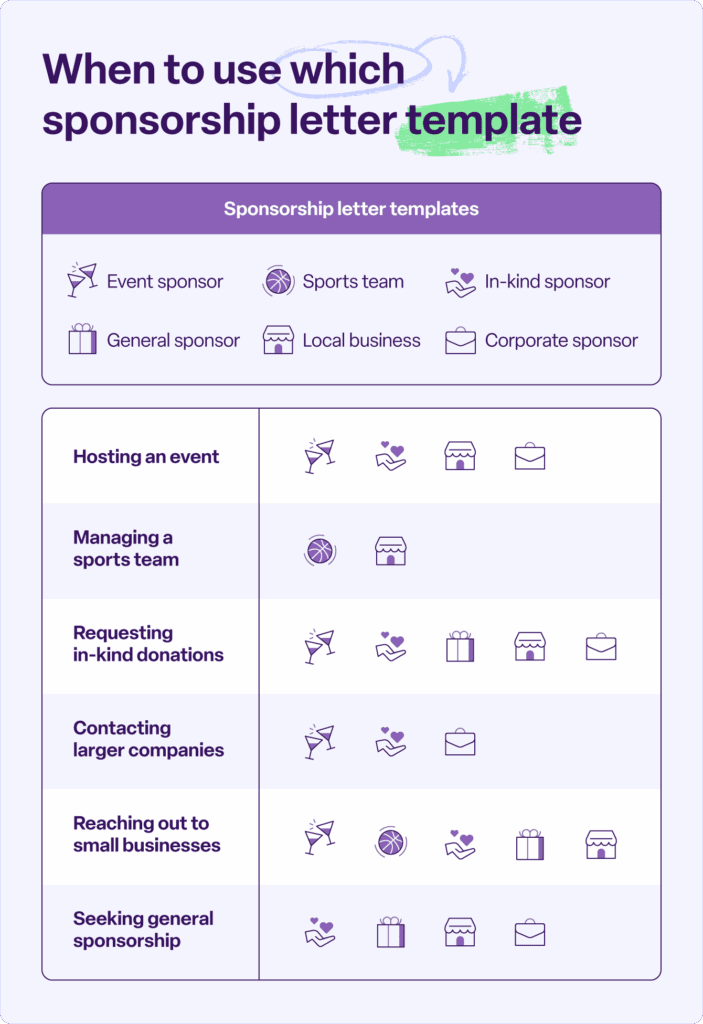
How do you know which sponsor letter template you should start with? In most cases, you can make your decision based on what type of person or business you’re contacting. For a more informed choice, consider the chart below.
7 free sponsorship letter templates
In a sponsorship request letter, organizations should outline what they need, how they will use the funding, and how the donor will benefit from their contributions. But depending on why you’re requesting sponsorship and who you’re contacting, the composition of your letter may vary.
If you’re not sure where to start, use one of the following sponsorship letter samples for specific use cases and different recipients to guide you. These request templates, as well as a thank-you letter, will simplify the drafting process and help you persuade potential sponsors to help your organization scale its impact.
1. Sponsorship request letter for event
Whether you want a local business to cater the event or you’re in the market for a Giving Day sponsor, your letter should provide ample information about your event, including:
- What type of event it is
- Your goals for the event
- The time and location
- How many attendees you’re expecting
- Whether sponsors should attend or not
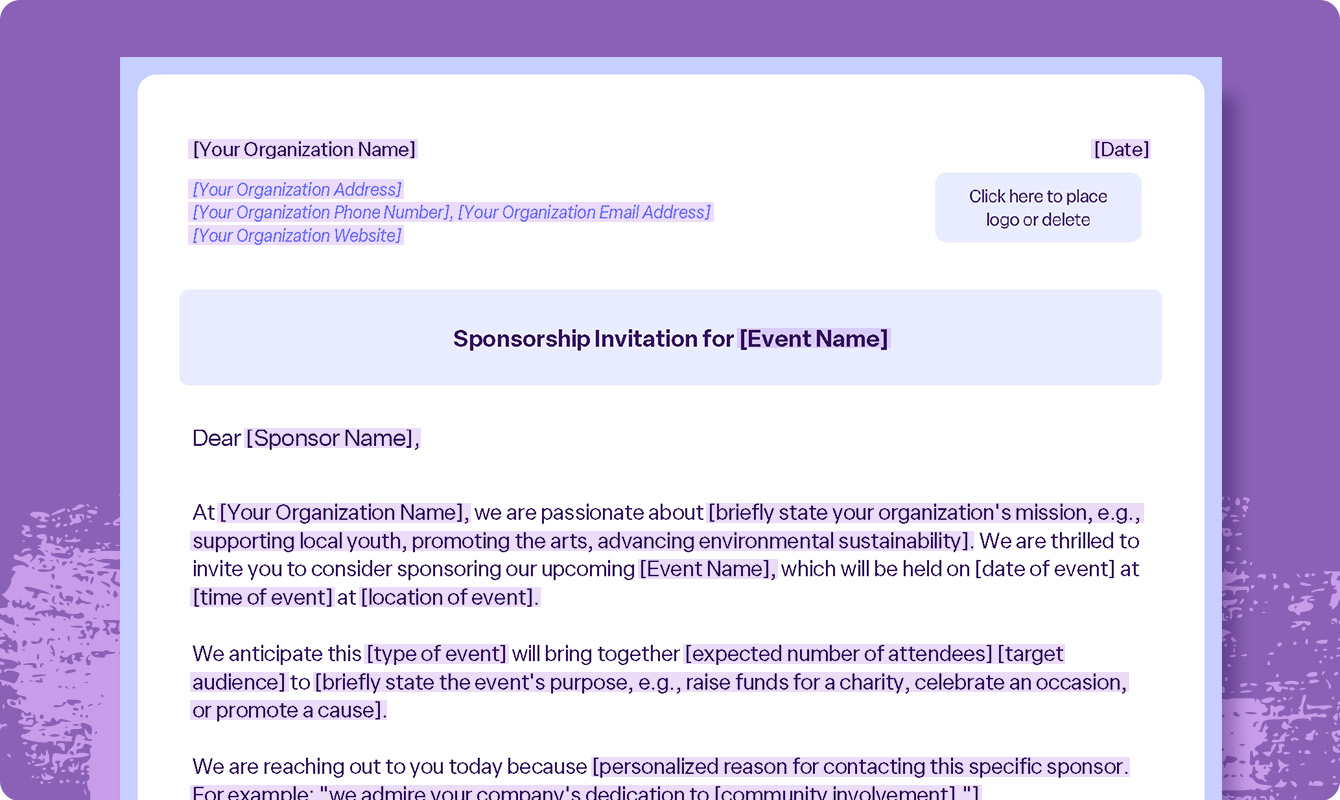
You can tailor your sponsorship letter to specify whether you’re looking for monetary donations, food contributions, or a long-term partnership.
2. Sponsorship letter for sports team
Sports teams may need funding to obtain new uniforms, rent facilities, or arrange transportation, and seeking sponsorships can secure ongoing support that keeps the team going.
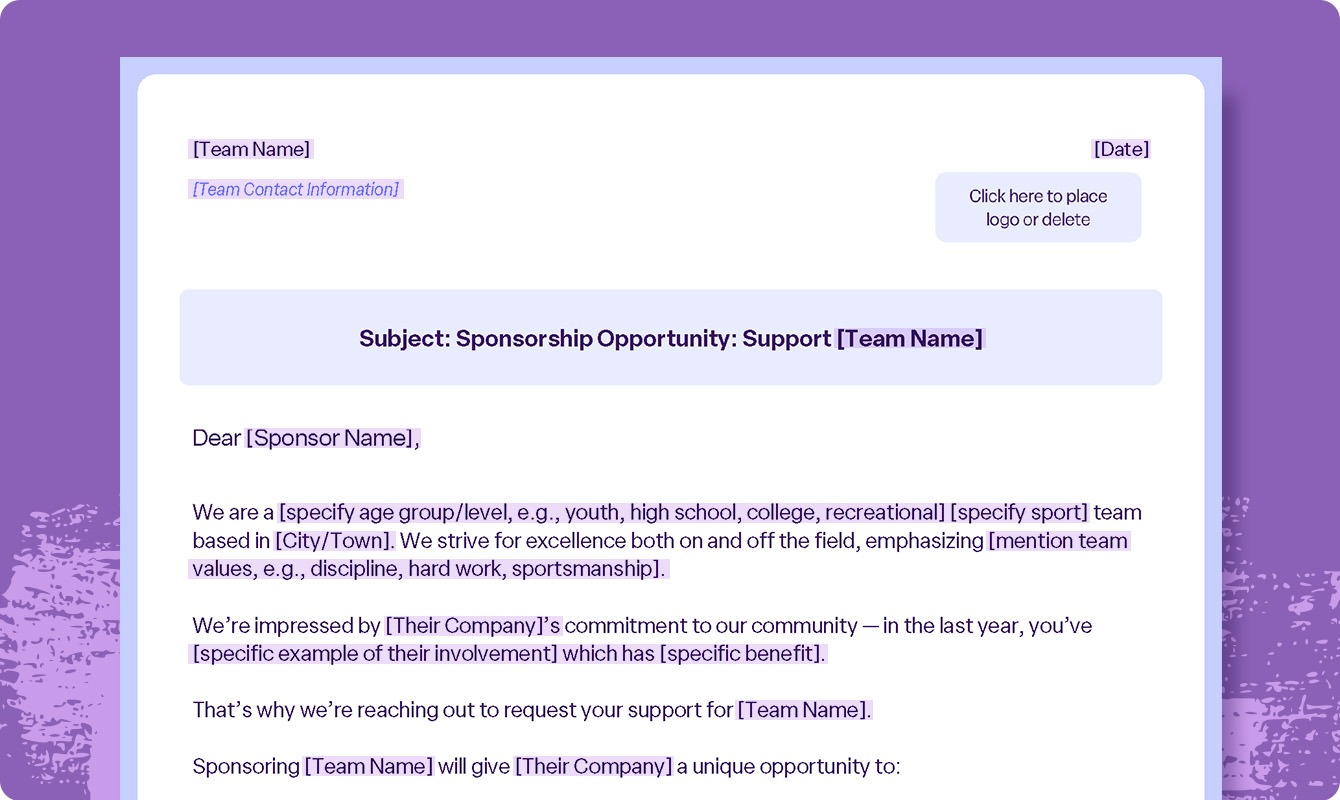
For sports team sponsorships, reaching out to local businesses or organizations with community ties may be more fruitful than contacting larger companies. No matter who you’re contacting, entice them by highlighting the benefits of sponsoring your team, such as banner advertisements at games.
3. In-kind sponsorship letter
You can tailor your sponsor letter to request in-kind donations if it makes more sense for your organization and current goals. Receiving in-kind contributions for an event or general use can ensure you have the goods and supplies you need, often acquiring them directly from manufacturers.
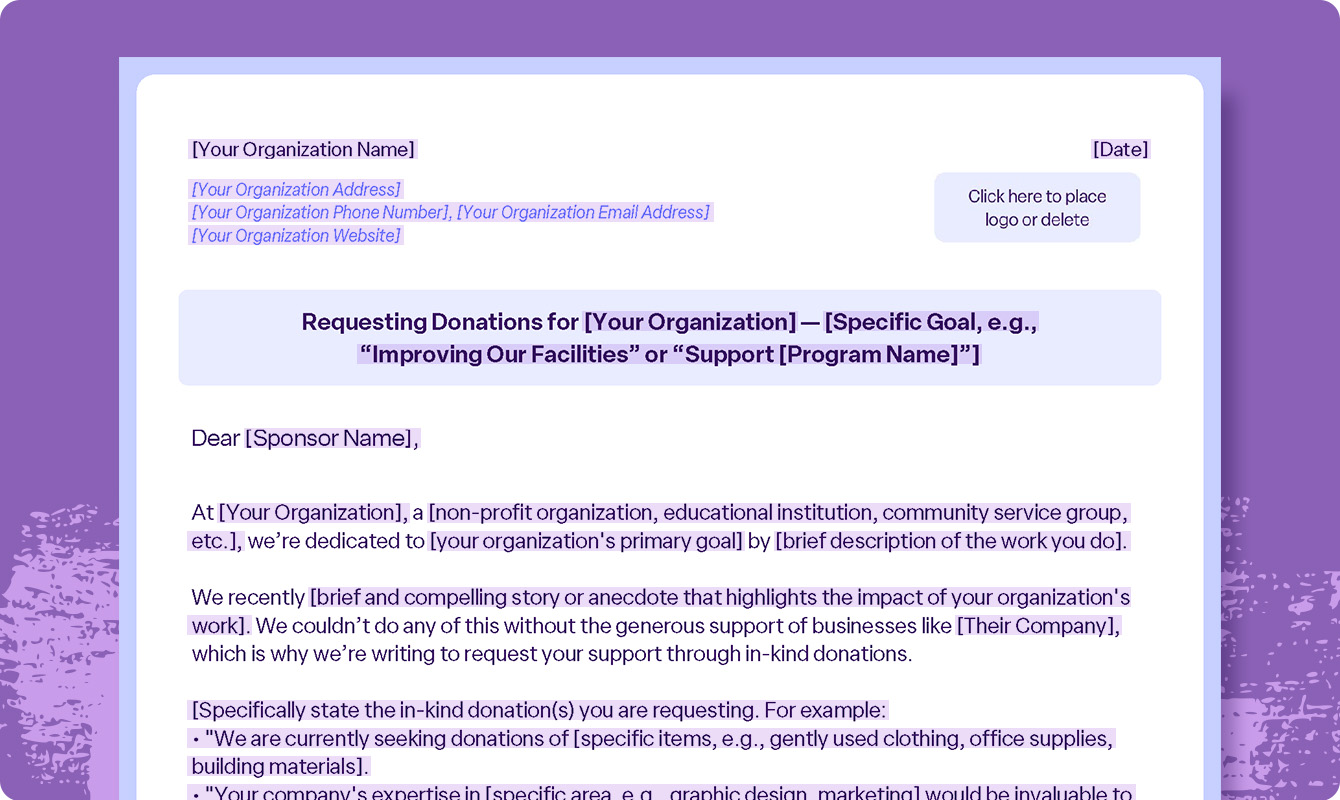
You might request donations of:
- Shelf-stable or prepared food
- Clothing in good condition
- Furniture
- Office equipment
- Cleaning supplies
- Legal services
- Marketing or web services
- Event spaces
- Volunteers
This type of sponsorship also allows small businesses to support your organization without feeling obligated to contribute monetary donations.
4. Corporate sponsorship request letter
If your organization is looking to get corporate sponsors, you’ll need to draft a tailored sponsorship request letter that highlights exactly how a partnership with your organization can benefit them.
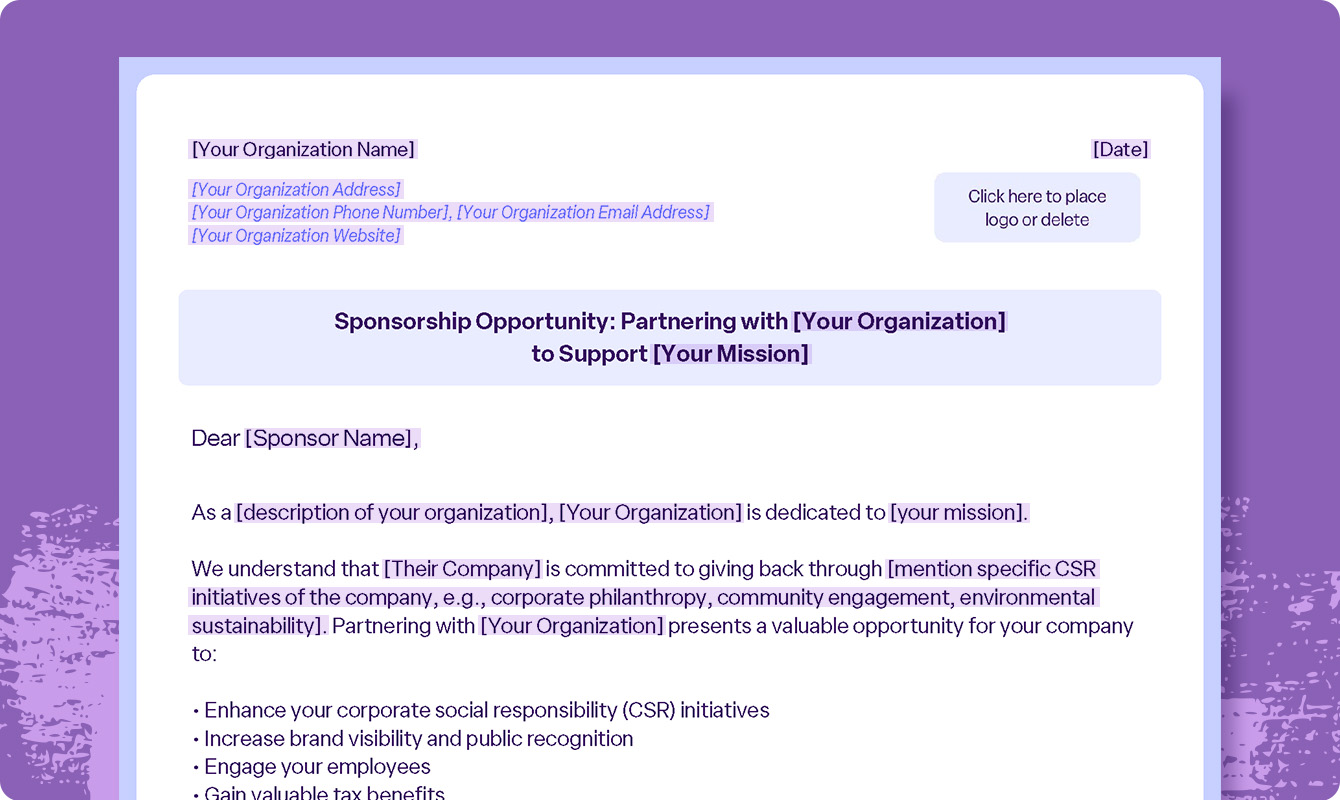
Larger businesses may be more likely to have an existing corporate philanthropy program, and researching the details of their initiatives can inform how you request their sponsorship. If they offer donation matching, for example, you can propose a partnership that encourages their team to support your organization, increasing participation and employee engagement.
5. Local business sponsorship letter
Connecting with local businesses is a great way to support your organization through a mutual interest in building up your community. If you’re writing a sponsorship letter to a local business, describing how your organization benefits the local community can help you take an empathetic approach that resonates with potential sponsors.
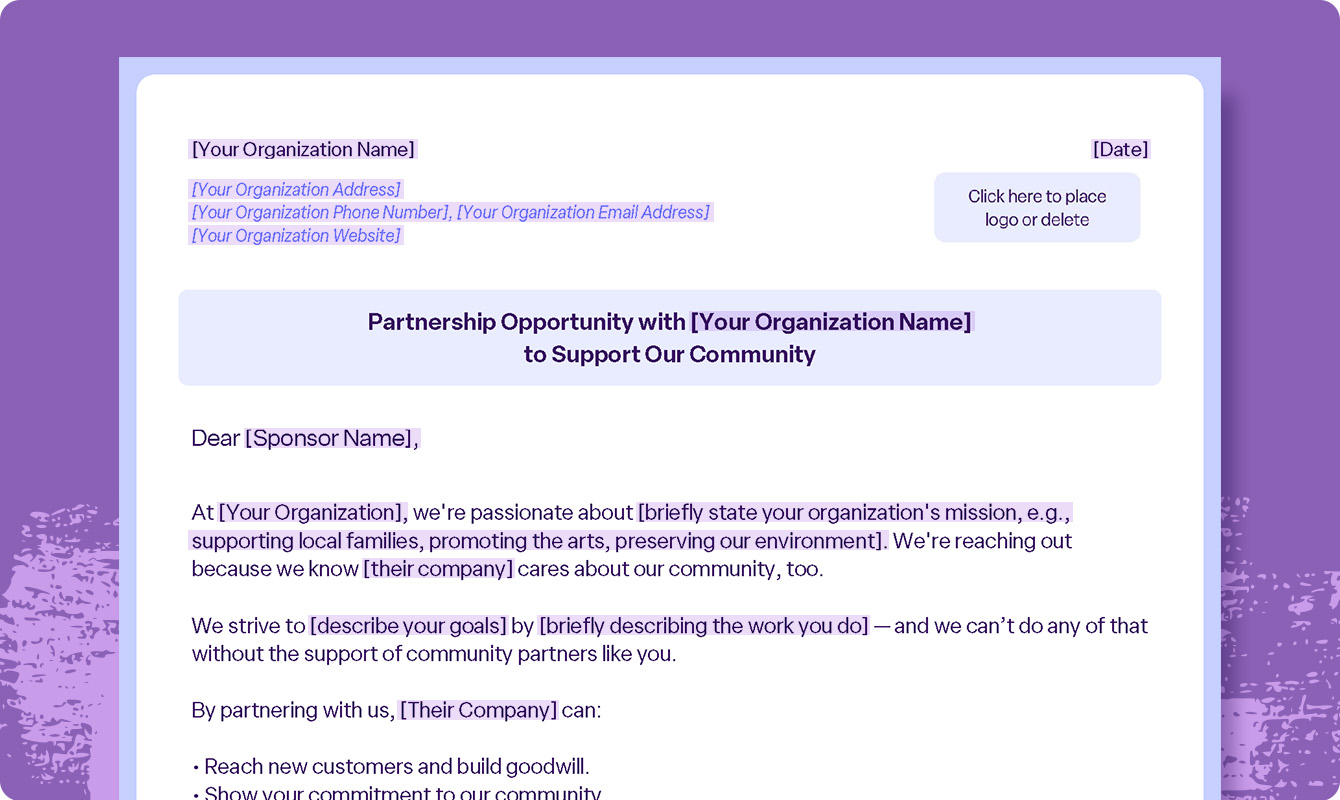
Before reaching out to a local business, it may be worthwhile to see if anyone in your organization has a personal connection to the owners. Arranging an in-person meeting or introducing yourself and your organization when hand-delivering your letter could lend a more personal touch to your request.
6. General sponsorship request letter
You don’t have to organize an event to seek out sponsors for your nonprofit or public organization. Modifying a general sponsorship letter for each potential sponsor is a great place to start if your organization needs funding or donations for:
- Regular operation
- Facility renovations
- Supplies and equipment
- New initiatives or programs
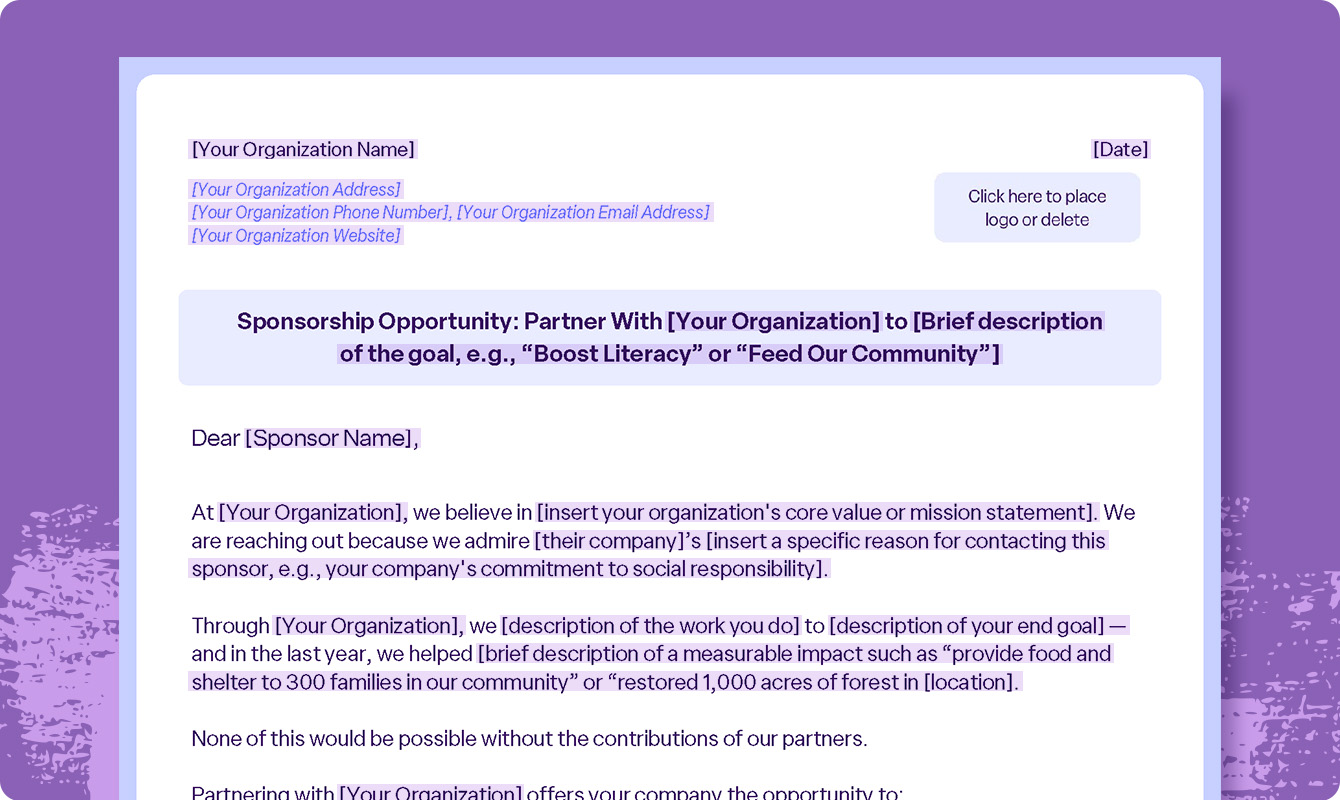
Whatever the reason, be specific in your request for sponsorship so potential sponsors know what you need and how their contributions will help you fulfill your mission.
7. Sponsor thank you letter
Expressing sincere gratitude for your sponsors is the best way to encourage a lasting, mutually beneficial partnership. When should you send a personalized thank-you letter? The timing depends on the nature of the sponsorship, but generally, you should send these notes after:
- Receiving a donation
- Your event is over
- Using their donation to accomplish a goal
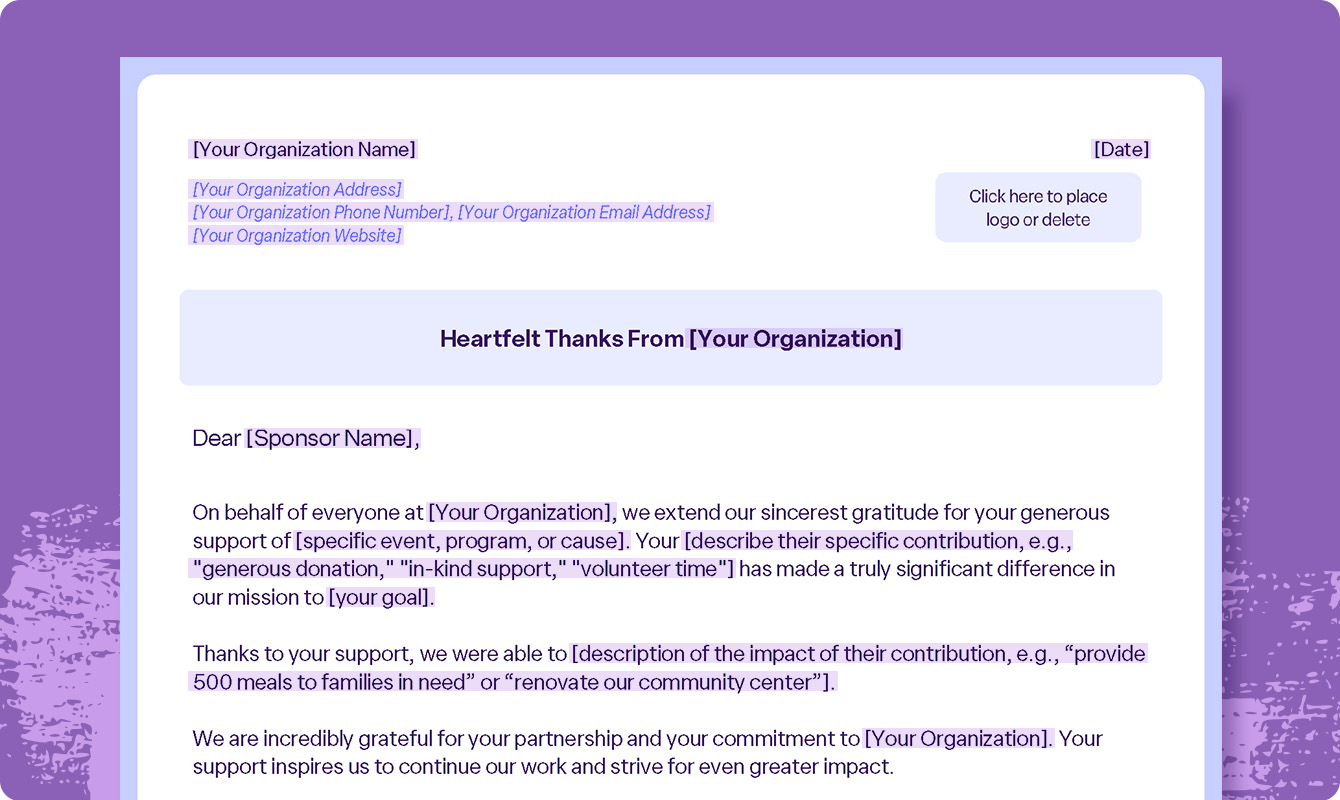
When you seek sponsorship, you want to find partners who will continue to support your cause. Writing a donor acknowledgment letter can demonstrate your appreciation, provide documentation of the sponsor’s contributions, and encourage future involvement.
How to write a sponsorship letter
The details of a sponsorship request letter may differ depending on your organization’s needs and who you’re soliciting, but there are several fundamental elements.
Whether you’re using a template or writing a request from scratch, including the following elements can foster trust and ensure clarity:
- Greeting: Opt for a professional or formal greeting, but personalize with your recipient’s name or title.
- Introduction: Provide a brief but comprehensive overview of your organization, your mission, and your activities.
- Campaign or event description: Clarify the reason you’re reaching out for sponsorship.
- Specific request: Include recommended donation amounts or specific in-kind donations you need.
- Sponsor benefits: Emphasize how sponsoring your organization can benefit sponsors.
- Levels of sponsorship: If relevant, provide options for different tiers of support to appeal to different budgets.
- Call to action: Make your CTA clear, concise, and easy to follow.
- Closing: Reiterate your goals and how much you would appreciate support from a sponsorship.
- Contact information: Make sure you include contact information and clear instructions for next steps.
- Postscript: Though not strictly necessary, including a postscript allows you to summarize the contents of your letter in a more digestible format.
7 best practices for how to write a sponsorship letter
Knowing how to ask for sponsors takes time and experience, but even if you’ve never written a sponsorship letter, follow the seven tips below to craft a compelling request for sponsorship.
1. Decide on your goals
Are you planning a fundraising event or looking for a local business to partner with your organization? Depending on your immediate needs, long-term goals, and who you’re contacting, the shape of your sponsorship letter may look different.
Before you start writing, identify what you hope to accomplish through this sponsorship, such as event sponsorship and donations of money, food, or other items. Be sure to clearly outline your goals and how a potential sponsor can help you achieve them in your letter.
Regardless of your short-term goals, sponsorship letters are primarily for cultivating lasting relationships between your organization and other individuals or businesses. Make sure to center your letter around developing mutually beneficial partnerships rather than solely focusing on immediate outcomes.
2. Identify compatible businesses and organizations
Researching viable organizations and individuals is one of the most important parts of requesting donations. Make sure the business or organization aligns with your mission. That way, you can prioritize the best fits for your organization and develop personalized talking points to connect with potential donors.
To get started, look into:
- Local businesses
- Past donors
- Current vendors or suppliers
- Organizations with corporate social responsibility programs
- Businesses in the same field as your organization
- People and businesses that your members, staff, or board know
Once you have a list of potential donors, find the correct contact information. Search the company’s website for relevant positions such as brand manager, sponsorship manager, or marketing manager. Alternatively, contact the business and ask who makes decisions about sponsorships.
3. Determine specific sponsor benefits
While many businesses are motivated by the opportunity to give back and do good, providing additional benefits can make them more likely to participate in a sponsorship program for your organization. Common benefits include:
- Community: Outline exactly how their support will benefit people, especially if your organization operates locally.
- Advertising: Promote their business at your events and in regular communications with your members.
- CSR: Explain how supporting your organization will benefit their existing CSR initiatives.
Customize your approach for each business with specific examples of benefits to demonstrate your attention to detail and sincerity.
4. Follow a clear structure
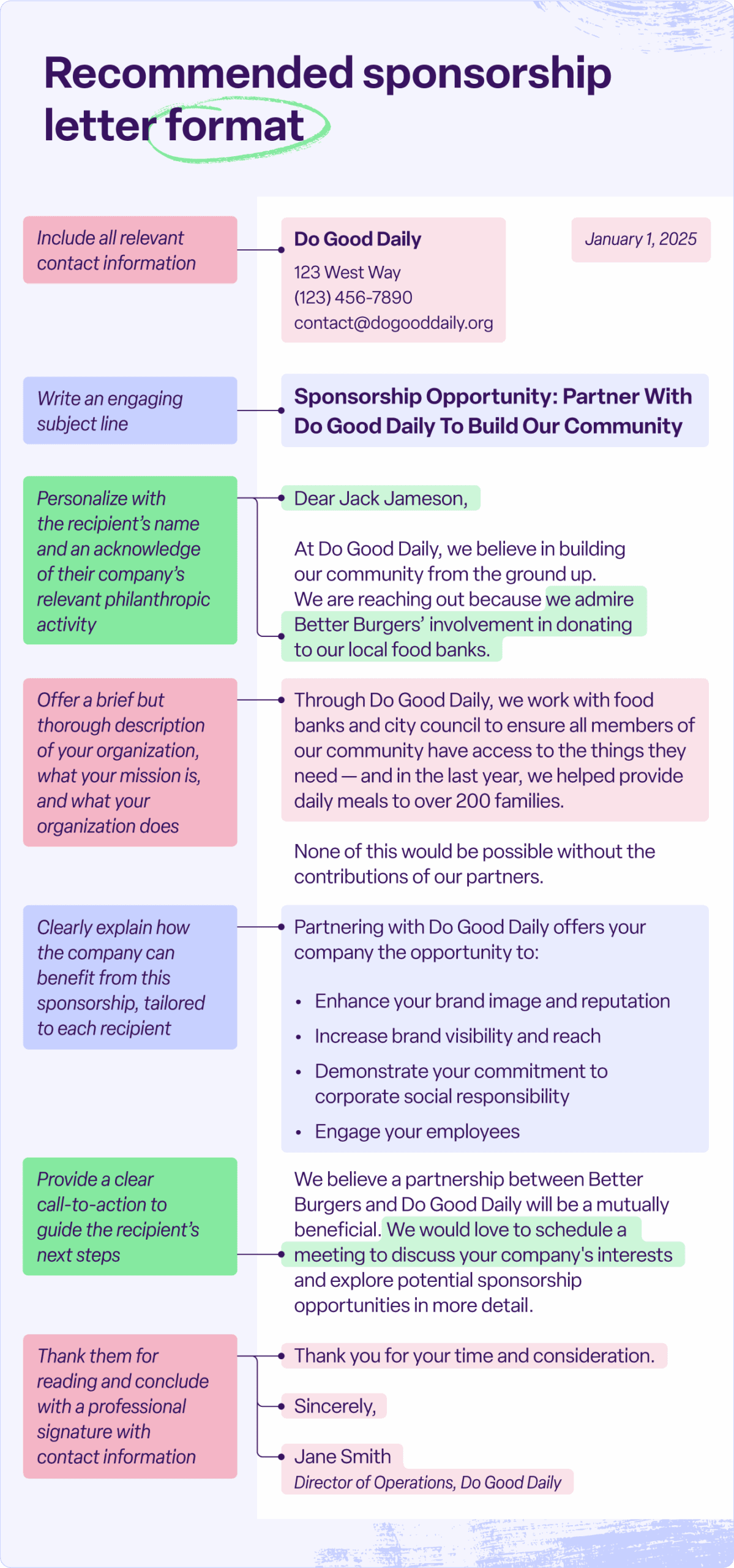
Successful sponsorship letters typically include the same elements that provide essential information about your organization, your sponsorship request, and what sponsors have to gain from a partnership.
Following the simple structure below can ensure your letter has the most important information a business would need before agreeing to a sponsorship opportunity. Whether you’re creating a sponsorship letter from scratch or using a sponsorship letter template, try to follow this basic structure:
| Description | Example | |
| Opening | Begin with an enticing subject line and a personalized greeting. | Help us lift up our community Good morning, James! |
| Overview | Write a brief introduction of your organization, your mission, and why you’re reaching out. | Our organization strives to support single mothers — and we need your help to expand our reach. |
| Benefits | Explain how supporting your organization helps make an impact and benefits them. | Your contributions help us feed local families. We honor all silver medal donors with a spotlight in our monthly newsletter. |
| Request | Make a request for contributions, including suggested donation amounts, donor tiers, or specific in-kind donations. | When you donate $25, we’re able to provide a week’s worth of lunches to kids in our programs. |
| Closing | Summarize your goals and express your sincere gratitude for their time and support. | With your help, we can continue supporting our wildlife reserves. Thank you for your continued support. |
| Contact information | Provide accurate phone numbers, email addresses, and mailing addresses. | You can make a donation online here or in person at our main office, located at [Address]. |
5. Personalize your messaging
Adapting a sample sponsorship request letter is a good place to start, but personalizing each letter can help you build better long-term relationships with donors.
Tailor the contents of your letter to address why you’re reaching out to each organization in particular. Some questions you might ask yourself include:
- Does the business operate in the same field as your organization does?
- Have they sponsored similar causes in the past?
- Are they a local business with a stake in the community?
- Are they looking for opportunities to get more brand visibility?
Personalization is also a critical component of major gift proposals. When asking for donations, the more you can connect emotionally with the recipient of your letter and demonstrate that you’ve done your research, the higher your chances of compelling prospective donors to contribute to your organization.
6. Provide a clear call-to-action
Sponsorship letters tend to contain a lot of information to help support your cause, but that means recipients may not know what to do after receiving them. Write clear, direct instructions regarding what you want from sponsors, how they can provide it, and what the next steps they should take include.
| Desired action | Call-to-action example (traditional mail) | Call-to-action example (e-mail) |
| Fill out an application form | “Please fill out the included form and mail to the following address:” | “Please click this link to fill out our form.” |
| Set up a meeting | “Please call XXX-XXX-XXXX to set up a meeting.” | “Schedule a meeting on [Name]’s calendar to discuss your options.” |
| Respond with interest or questions | “Let us know if you have any questions. Feel free to call XXX-XXX-XXXX, send an email to [email protected], or send a letter to ADDRESS.” | “Just respond to this email, or give us a call at XXX-XXX-XXXX.” |
No matter how you want potential sponsors to engage with your organization, always include contact information in your letter so they can reach out with questions.
7. Follow up and express gratitude
You likely won’t get an immediate response from potential sponsors, but that doesn’t mean you should give up. Sending a follow-up letter can keep your organization’s request top-of-mind, but the timing can be challenging to get right.
As a general rule of thumb, you may want to send a follow-up if you haven’t heard anything after a week or two. Giving the potential sponsor a call can also get you in touch more quickly.
If you do get a sponsor agreement as a result of your letters, show appreciation for your donors’ support, both during and immediately after your event or after receiving their donations. Gratitude demonstrates your commitment to the partnership between your organization and your sponsor, encouraging ongoing support.
How do you convince a sponsor to sponsor you?
One of the most effective ways to appeal to potential sponsors is through an empathetic approach that highlights your organization’s impact and clearly outlines how your sponsor will benefit from this partnership.
Personalizing each letter by doing your research can also increase the likelihood that you’ll get a response. More thorough, personalized messages tend to be productive whether you’re requesting sponsorships or applying for mental health grants as a nonprofit.
Going the extra mile to find the correct contact, sending your letters from a member of leadership, and seeking out sponsors who would be a good fit for your organization are critical steps to securing sponsorship.
As you start sending out sponsorship letters, you may learn that some approaches work better than others. Take time to assess your process and make adjustments to better connect with potential sponsors.
If a traditional approach isn’t as effective as you’d hoped, adopting the right tools, like Bonterra’s fundraising software, can help recruit and retain more donors for your organization.
Secure the right sponsors with Bonterra
After you’ve conducted your prospect research, writing sponsorship letters is a great way to articulate your mission and get the support you need. Using a sponsorship letter template can simplify this resource-intensive task.
Bonterra’s integrated solutions help make sponsor acquisition quicker, easier, and more effective. With the right nonprofit CRM, you can move beyond generic outreach to deliver targeted, personalized requests.
Secure new sponsors and foster long-term, mutually rewarding relationships with well-crafted requests and software that scales with your organization.

Sponsorship letter FAQ
What are the essential elements of a sponsorship letter?
A sponsorship letter must clearly state who your organization is and what mission you serve. Essential elements include:
- A personalized salutation
- A brief overview of your organization and mission
- A concise introduction to the project or event
- A brief explanation of how contributions benefit your organization and sponsors
- A description of sponsorship levels and/or donation amounts
- A strong call-to-action with clear next steps
What documents are needed for a sponsorship letter?
While the letter itself is the primary document, you can also provide supplementary materials to enhance your request. These may include:
- A concise sponsorship packet or proposal
- Your organization’s mission statement
- Recent impact statistics or success stories
- Relevant financial information (e.g., 501(c)(3) documentation)
What is the typical format for a sponsorship letter?
Sponsorship letters typically follow a standard business letter format, characterized by professionalism and clarity. Key format components include:
- Your organization’s letterhead and contact information
- The date and the recipient’s personalized contact information
- A concise body, ideally limited to one page
- A formal closing and signature



Work with Bonterra
Ready to drive more impact?