Donor Lists for Nonprofits Guide: How To Build a Donor List

Donor lists for nonprofits can help organizations conduct meaningful outreach and increase funds raised. However, a simple static list often results in outdated data, leading to low donor retention over time.
A donor database or nonprofit CRM tool is a better way. By transitioning your donor list to software that updates in real time, you can stay informed about each donor, their location, and their giving history. Plus, you’re better able to track key nonprofit KPIs, such as donor retention.
In this guide, we explain what a donor list is, how to create one, and why it’s so beneficial.
What is a donor list?
A donor list is a collection of contacts who have given (or may give) to your nonprofit organization. A typical donor list is often a static document or spreadsheet containing a list of names and information, but a donor database is a dynamic collection of donor details.
Common types of donor lists include:
- Current and past donors: Those who have given in the past or currently make donations
- Prospective donors: Individuals who show interest in your organization but haven’t yet made a financial contribution
- Engaged constituents: Volunteers, followers, subscribers, and advocates
How to build a donor list
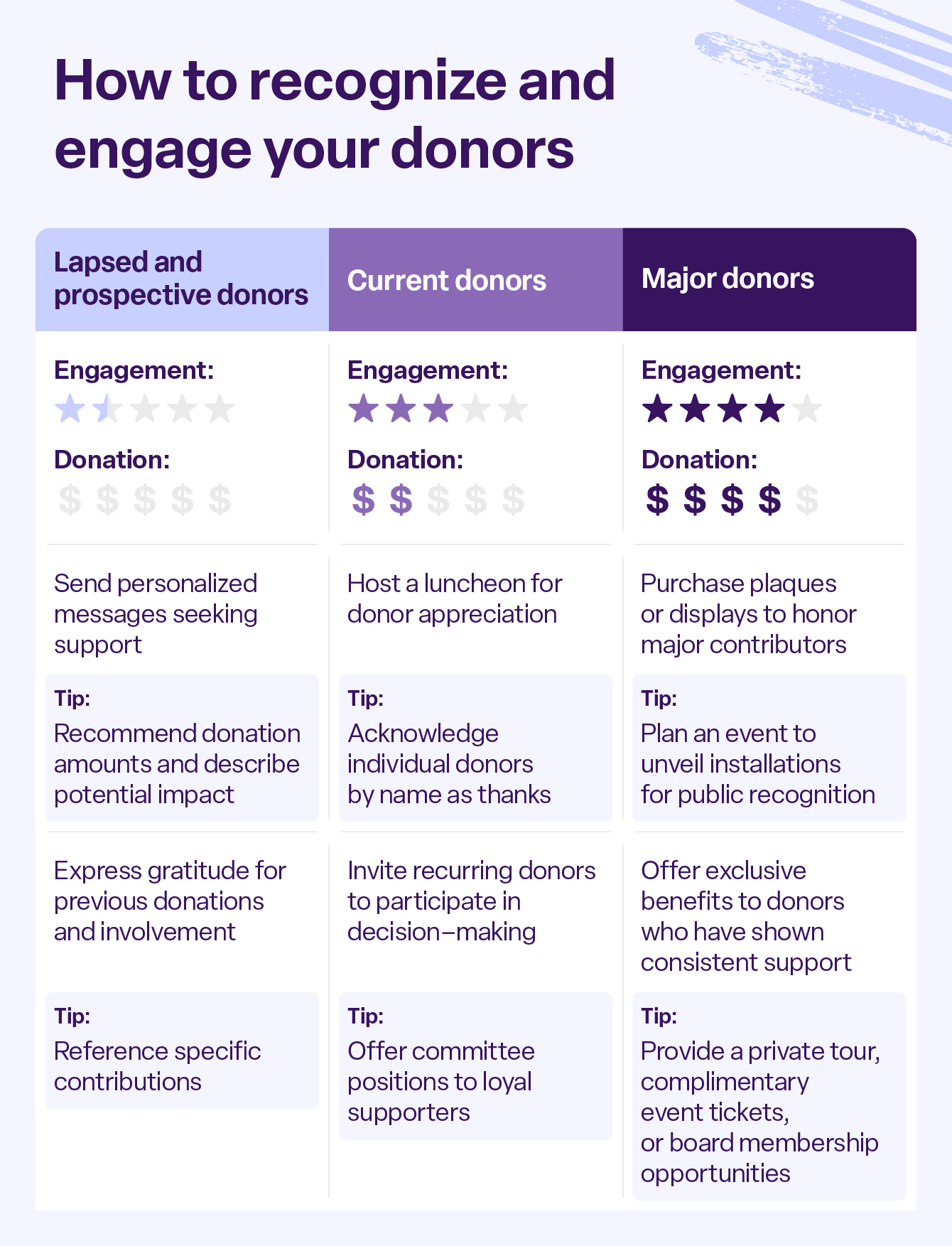
Building a donor list isn’t too complicated, but you do have to be aware of the right steps to take and the crucial information to include.
1. Define the purpose of your list
First, determine why you’re creating this list. Different needs may require different segments or information.
Here are a few common reasons for creating donor lists:
- Acquisition campaigns: Attracting new donors and expanding your organization’s reach
- Cultivation: Keeping existing or former donors in the loop about how their donations are used and what your organization is achieving
- Major gift requests: Making a large ask from high-net-worth donors and engaging in continued stewardship
- Stewardship and retention: Personalizing communication to supporters to keep them engaged and make them feel appreciated
- Event promotion: Inviting donors to events or asking them to consider sponsorships
Tip
Curate your list. A smaller list of highly engaged, qualified leads is more valuable than a massive, unengaged list.
2. Add your warmest leads
Once you know why you’re creating your list, it’s time to think about adding donors. If you’re creating a list focused on donor retention, you might prioritize recent and recurring donors. On the other hand, if your goal is to source donations from those who are engaged but haven’t yet made a contribution, you might begin with volunteers and advocates.
Either way, start with those who are already in your system and meet the relevant qualifications. Here are some of the most common places to begin:
- Recent and recurring donors
- Lapsed donors
- Board members and staff
- Volunteers and advocates
- Event attendees
When creating your list, capture the essential details, including contact information, communication preferences, and a record of past engagement or donations.
This is where a donor database can come in handy. Because it tracks that information already, you won’t have to do much extra work or remember to frequently update your list, as it’ll be done for you.

3. Implement multi-channel donor acquisition strategies
To grow your list and get more donor funding, you’ll want to leverage multi-channel donor acquisition strategies. Relying on a single channel may work for a while, but it won’t get you the breadth or depth you need.
Instead, once you’ve captured all of your existing donors and supporters, consider implementing some of the following strategies:
- Email newsletters: Create a regular email newsletter to keep supporters in the know, then make sure it’s linked from your website, social media accounts, and other materials so it’s simple to sign up.
- Gated website resources: Offer downloads like guides or templates that benefit your target audience, but ask them to join your list in return.
- Peer outreach: Request that current supporters encourage their peers to give to or support your cause in other ways.
- Social media ads: Use targeted social media ads to generate new leads based on location, interests, or other data.
- Donation forms with opt-ins: If someone decides to donate for the first time, make it easy for them to opt in to future contact with a simple form.
4. Conduct ethical donor prospecting
While it’s possible to purchase a donor list, it’s not the best idea. It might seem like a shortcut, but it often causes more work with outdated, inaccurate, or disinterested contacts.
Plus, people on a purchased list won’t have opted in to your communications, which, at best, leads to low engagement and, at worst, ethical concerns around consent and spam. Donors also expect privacy when giving to nonprofits, so they won’t be thrilled to find out their information was sold.
With regulations like CAN-SPAM and GDPR (for international supporters), as well as various state privacy laws, it’s not worth the risk. Instead, stay compliant by growing your list organically through opt-in contacts.
This doesn’t mean you can’t prospect or reach out to people who aren’t current donors. To learn who may be a fit, use prospect research tools, target warm leads, analyze public giving histories, and leverage social and professional networks to identify potential donors.
Ethical prospecting will bring you more engaged donors who trust your organization, saving you the headache of dealing with legal issues.
5. Segment your donor list
Finally, segment your list. Donor segmentation is the practice of categorizing donors based on specific criteria, such as giving frequency or engagement history. When you have clear segments and understand what they want and why they give, you can better target your communications directly to each group for a more meaningful impact.
Here are a few common criteria for donor segmentation:
- Recency: How recently did the donor give? This can help target lapsed donors for reengagement.
- Frequency: How often do they give? This is useful for identifying loyal, recurring donors.
- Monetary value: How much do they give? Use this information to prioritize major or mid-level donors.
- Engagement history: Beyond donations, look at who is highly engaged through volunteering, event attendance, email opens, and advocacy.
- Preferences: Pay attention to how your supporters want to communicate, such as email, mail, or social media. This helps you personalize your outreach.
- Responsiveness: Look at who consistently responds to your organization’s outreach, then use what you find to guide your timing and channels.
- Motivation: Consider the reasons for past donations, whether driven by a specific cause or seasonal factors, and use that insight to inform future messaging.
Bonterra EveryAction makes segmentation easier with built-in tools like DonorTrends. Bonterra’s solutions are designed to help you use AI and predictive analysis to better engage your donors based on factors like their likelihood of responding to asks. These tools allow you to better segment donors, craft targeted outreach, identify the most effective groups to contact, and determine areas where you can experiment to reduce churn or increase retention.
Why your organization needs a donor list
A donor list doesn’t just give you a snapshot of who has contributed to your organization financially. In fact, there are several advantages of maintaining a robust donor database, including:
- Stronger accuracy and targeting of outreach
- Improved donor experience
- Higher retention and long-term support
- Data-driven decision making
Let’s take a look at a few things a donor list can help you do.
Acquire qualified donors
Donor acquisition is a pressing topic for nonprofits seeking to attract new donors, and rightfully so — without generous donors, they may struggle to continue making a meaningful impact. A donor list can make acquiring and welcoming new donors both streamlined and straightforward.
With automated welcome emails, a donor making their first contribution will receive a personalized email thanking them and welcoming them as a supporter. Additionally, you can set up campaigns to make follow-up requests after the initial gift, resulting in higher retention rates.
Engage and retain donors
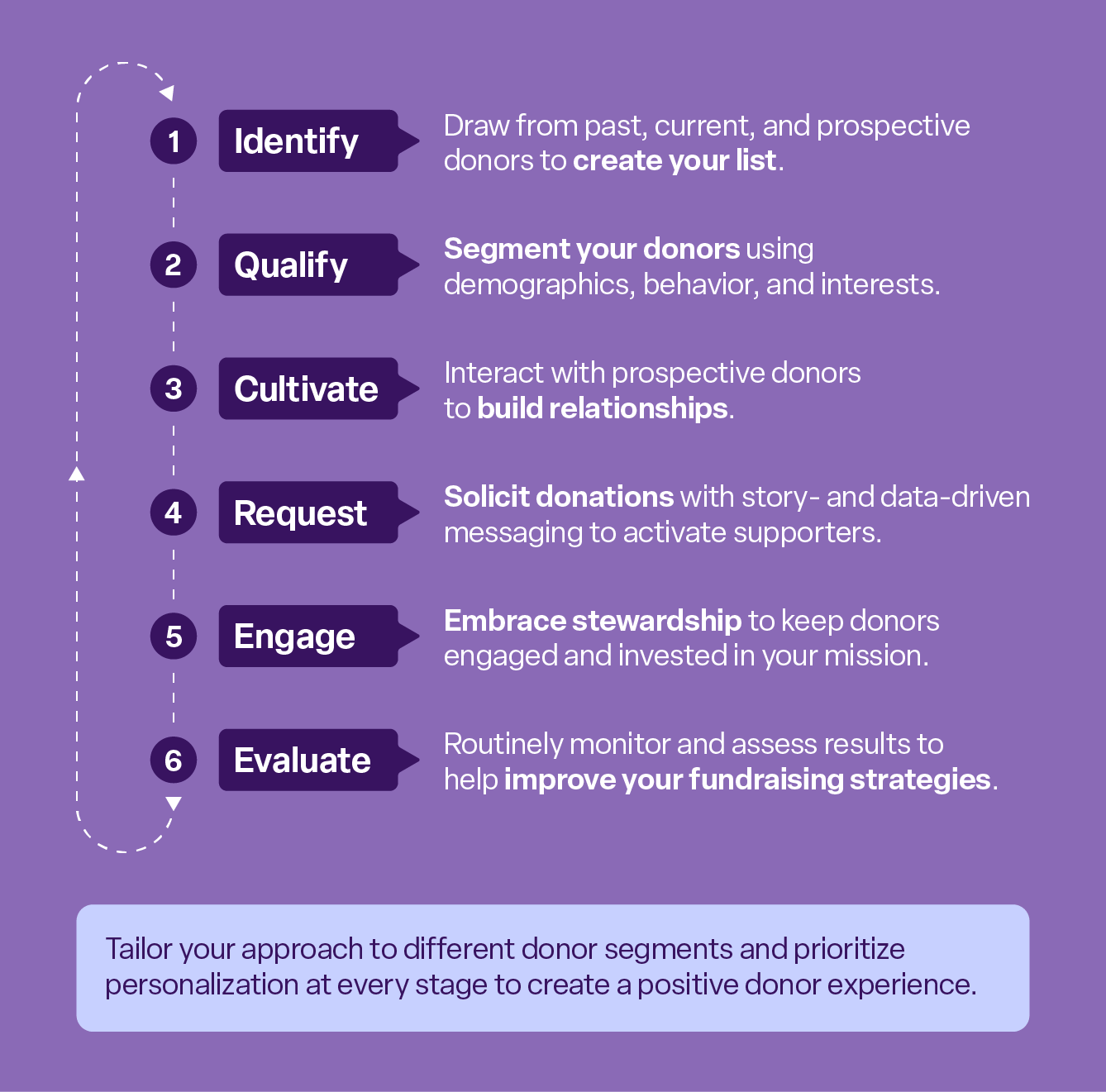
Donor lists also help you engage and retain your existing donors. With segmentation, you can target specific groups with personalized communication that you know will appeal to them directly, rather than generic form letters.
You can send mission-focused communication to segments that have a passion for a particular aspect of your mission, or you can segment by engagement history to request non-monetary support, such as volunteering.
Don’t forget to recognize your donors, too. If your supporters feel appreciated for their efforts and contributions, they’ll likely want to continue to help out.
Increase donor lifetime value
Donor lists can also help grow lifetime donor value. If you’re using a nonprofit CRM system, it can track every person’s giving history, engagement, and preferences, which you can then use to build segmented lists. These segmented lists enable you to tailor your outreach effectively, whether that’s sending a targeted appeal or a personalized thank-you to a major donor.
Because your CRM tracks data in real time, you’ll be able to measure the efficacy of your outreach and campaigns, allowing you to glean insights like when to ask and which channels perform best. You can also leverage predictive analytics to anticipate donor behavior, allowing you to plan your stewardship more effectively.
In doing all of this, you’re likely to see higher retention rates and larger donations over time, as well as stronger relationships with donors. If that sounds compelling, consider donor management software like Bonterra EveryAction.
EveryAction’s CRM integrates donor data, segmentation, and reporting into a single platform, supporting automated and personalized outreach, as well as tracking trends in real time.

Turn your donor list into a resource for growth with Bonterra
A well-cultivated donor list is key to increasing and retaining donors for nonprofits, even helping you increase lifetime donor value. If you’re currently managing thousands of contacts in spreadsheets and struggling to segment effectively, it may be time for an upgrade to a smarter CRM. The great news is that Bonterra has an option for every organization.
Bonterra EveryAction is excellent for large or growing nonprofits that need sophisticated donor segmentation, reporting, and automation. Network for Good is a simpler, cost-effective solution that’s perfect for smaller-to-midsized organizations that have smaller donor bases but still need robust support.
Don’t let stale spreadsheets bog down the power of your donor list. Instead, get set up with a streamlined CRM today and watch your funds — and donor satisfaction — rise.
Explore Bonterra’s nonprofit software ecosystem today.
FAQ
How do I find donors for my nonprofit?
Start with warm leads: existing or past donors, event attendees, volunteers, and social media or newsletter subscribers. Then, add digital acquisition strategies, such as social ads or sign-ups for your newsletter or mailing list. You can also research and target high-potential donors through prospect research tools.
Are donor lists public record?
Generally, donor lists are not a public record. This information is usually private and confidential. However, some data may be accessible in annual reports or public filings if it was voluntarily disclosed.
What is the RFM model in fundraising?
The RFM model in fundraising is as follows:
- Recency: How recently a donor made a contribution
- Frequency: How often a donor gives
- Monetary value: How much the donor gave
This is often used to determine donor priority and guide segmentation. It serves as a simple way to understand your most active donors and those who contribute the most, letting you prioritize them in your outreach.



Work with Bonterra
Ready to drive more impact?