2026 is a turning point for social impact. Trust will decide who moves forward.

As social impact organizations face rising demand, tightening resources, and growing expectations for accountability, the ability to earn and sustain trust has become one of the most important factors shaping long-term impact. That tension sits at the heart of Bonterra’s 2026 Predictions report, which outlines how funding uncertainty, rising expectations for transparency, and rapid advances in AI are reshaping what funders and nonprofits will require from one another in the years ahead.
From participants and frontline staff to funders, partners, and community stakeholders, everyone involved in social impact work needs to believe that programs are reliable, transparent, and delivering meaningful results. That belief is built through consistent evidence, clear communication, and systems that make progress visible rather than fragmented across disconnected reports.
But, trust isn’t automatic.
In an environment defined by funding uncertainty and growing scrutiny, trust has to be built deliberately, reinforced continuously, and protected over time. The way organizations measure outcomes, share data, and communicate progress now plays a central role in whether trust boosts their mission or holds it back.
Trust shapes how organizations are funded, how teams stay aligned, and how confidently funders invest. When trust is strong, leaders gain the space to focus on advancing their mission rather than constantly justifying it. When it falters, even effective programs struggle to move forward.
A sector at a defining crossroads
The social impact sector is entering a period shaped by multiple forces converging at once, including shifting public policy, receding government support, rising operational complexity, and rapid advances in AI and data technology.
As Scott Brighton, CEO of Bonterra, notes in the 2026 Predictions report, many funders want to do more but face real barriers.
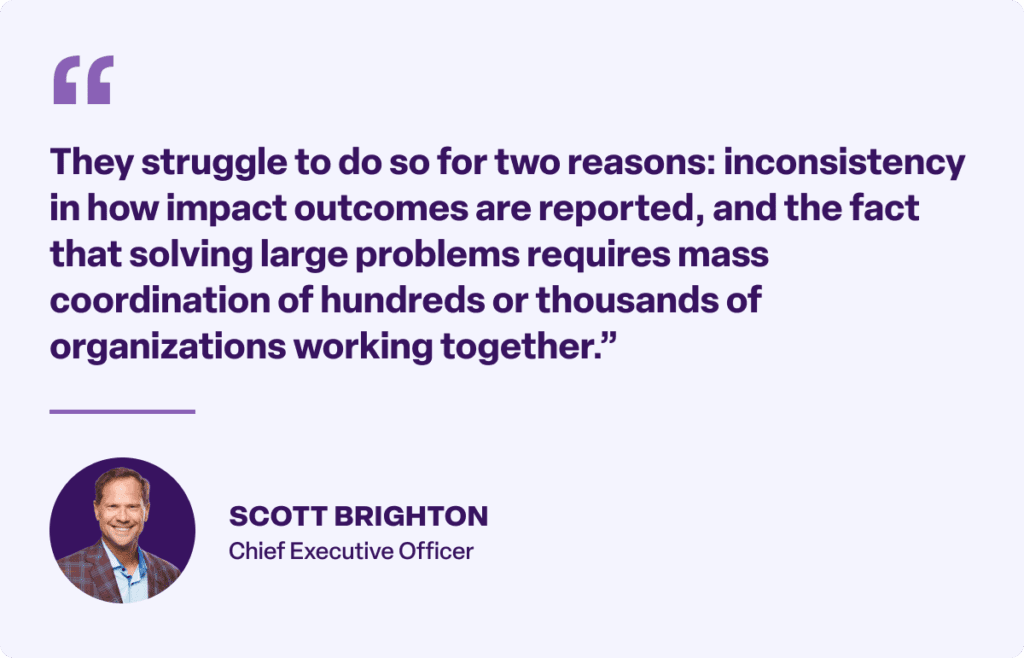
The systems many organizations still rely on, like manual spreadsheets, siloed tools, and static reports were not designed to support that level of coordination or clarity. As a result, leaders are often left piecing together incomplete information while trying to demonstrate progress, align partners, and respond to real-time community needs.
What’s emerging in response is a shift toward shared infrastructure and collective outcomes, where success is measured not in isolation but across networks of organizations working toward common goals.
Trust is becoming the measure of readiness
Trust increasingly shows up in how clearly networks of organizations can communicate shared impact, and how easily funders can understand where progress is happening across a cause and where it isn’t.
According to Scott,
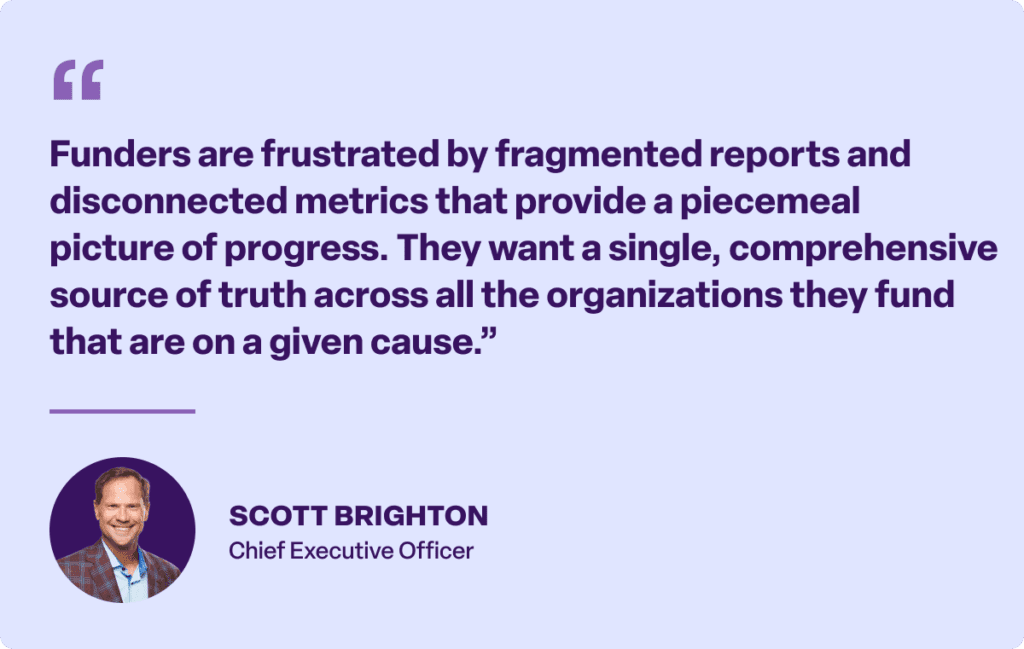
Without that shared visibility, even strong outcomes can be unclear. Fragmented data makes it harder to demonstrate momentum, align stakeholders, and make confident funding decisions. Transparency builds trust, but transparency depends on data visibility that is consistent, timely, and shared.
From retrospective reporting to real-time insight
For years, quarterly and annual reports have served as the backbone of accountability in social impact work. While still important, they are increasingly insufficient in a world where decisions need to be made faster and funding environments can change with little warning.
John Manganaro, Bonterra’s Chief Product Officer, describes the shift clearly:
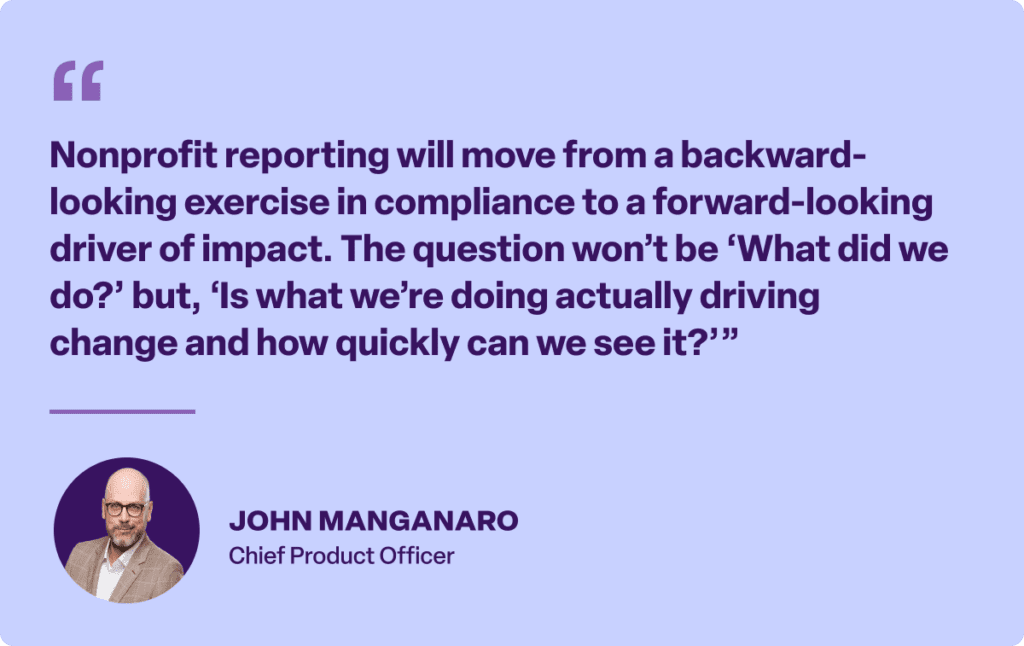
Real-time dashboards and connected data systems make that shift possible by turning reporting into an active decision-making tool rather than a retrospective obligation. When organizations can see progress as it unfolds, they can adjust faster, align more closely with partners, and communicate outcomes with greater clarity and confidence.
For funders, this visibility replaces fragmented narratives with a more complete and consistent picture of impact. For nonprofits, it creates the flexibility needed to respond to emerging needs while staying accountable to long-term goals.
AI’s role is not efficiency alone, but credibility
AI is often framed as a productivity accelerator, but in social impact work, its true value lies in how well it supports trust, credibility, and human judgment.
As the Predictions report emphasizes, technology alone is not enough. AI must be transparent, ethical, and easy to adopt if it’s going to deliver measurable value. As Ben Miller, Bonterra’s SVP of Data Science and Analytics, explains,
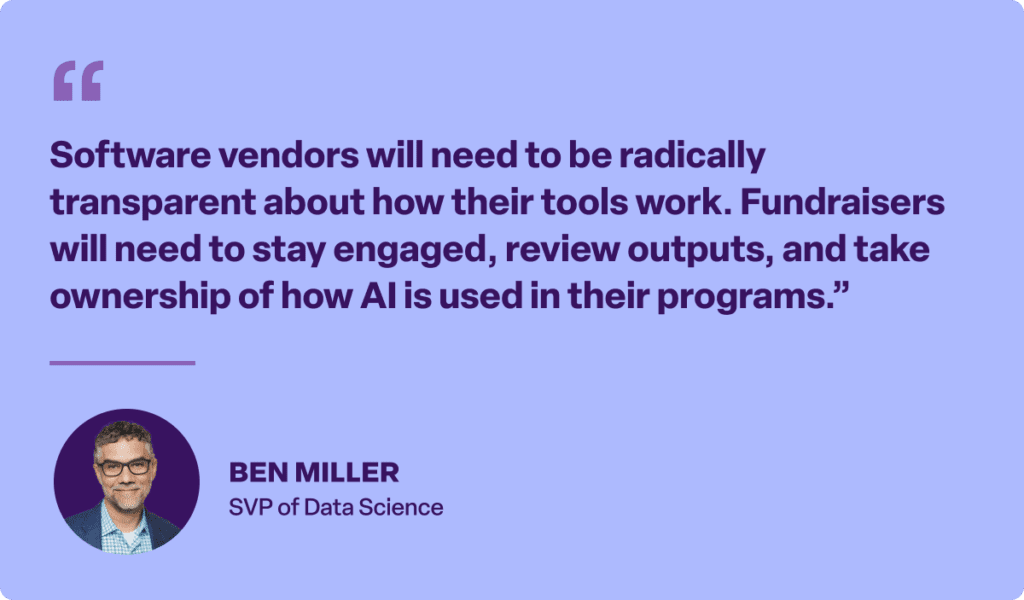
Tools that require heavy training or obscure how decisions are made risk undermining confidence rather than building it.
This is where agentic AI begins to matter, not as a replacement for people, but as a way to reduce administrative burden, surface clearer insights, and help teams act on information in real time while ensuring human oversight remains central to every decision.
Turning insight into action with Bonterra Que
Bonterra Que reflects many of the shifts outlined in the 2026 Predictions report by translating insight into action across the social good ecosystem.
As the first fully agentic AI platform built specifically for social impact, Que doesn’t just analyze data; it acts within the tools organizations already use, helping nonprofits and funders move faster while maintaining transparency and trust. From fundraising and grantmaking to service delivery and decision-making informed by real-time insight, Que supports better decisions by drawing on intelligence from across the Bonterra Network.
Because Que is embedded across Bonterra’s ecosystem, its recommendations are grounded in real-world context, not generic advice. That means nonprofits benefit from guidance and next-best actions rooted in their own data, fundraising history, and program context, while funders can more easily identify aligned nonprofits, streamline review processes, and make more consistent, transparent decisions using shared intelligence.
Most importantly, Que was designed with ethics, credibility, and human judgment at its core, reflecting the report’s emphasis on responsible AI as a prerequisite for long-term trust.
Why this moment matters
What makes 2026 different is that the challenges nonprofits and funders have been navigating for years such as funding uncertainty, rising expectations for transparency, and growing complexity are now colliding with new tools and approaches that can actually help address them.
Organizations that move forward with intention, grounding innovation in transparency, aligning around shared outcomes, and investing in systems that make trust visible will be better positioned to navigate uncertainty and lead with confidence.
Those that don’t risk falling behind, not because their mission lacks value, but because their infrastructure can no longer keep pace with the expectations placed on them.
Go deeper on what’s ahead
This blog highlights only part of what’s shaping the year ahead.
Bonterra’s 2026 Predictions: Technology + AI in Social Impact brings together original research and firsthand insights from nonprofit, foundation, and corporate leaders to explore what’s coming next and what organizations need to be ready for.
If you’re responsible for strategy, accountability, or long-term growth, this guide offers a clear view of the forces redefining the sector and the decisions that will matter most.
Download the full 2026 Predictions report to understand what’s ahead and how to lead through it with clarity and confidence.




Work with Bonterra
Ready to drive more impact?