7 nonprofit annual report examples to inspire your organization (+ free template)

An annual report is an excellent way for nonprofit organizations to cultivate relationships with new donors and steward long-time supporters. While not required by law to publish them, nonprofits often find these reports to be a cornerstone of their communications strategy, allowing for valuable outreach.
Your annual report can spotlight program successes, volunteers and donors, impact stories, and how your nonprofit was a responsible, transparent steward of donations. Nonprofit annual report templates can help you create a coherent, shareable, and engaging report.
Nonprofit reporting software like Bonterra can track the important data you’ll need for a compelling annual report, letting you leverage data-driven storytelling. In addition to software and templates, we’ve compiled seven annual report examples to inspire your organization.
Annual report format essentials
To create an effective annual report, you’ll need to make sure it’s informative, emotionally moving, and empowering. First, determine your annual report design. This may be a high-cost, glossy full-color magazine or a lower-cost, simple format. You can distribute your report as an old-fashioned hard copy, a downloadable PDF, or both.
Next, determine the content and structure to include. The best annual reports include these basic elements:
- Table of contents
- Your nonprofit’s logo, color scheme, and other branding aspects
- Lots of photos, as well as interactive elements for an engaging annual report format
- Your organization’s background, mission, and purpose statement
- Easily understandable charts and graphs with relevant data
- Donor, board, and staff lists
- Highlights from the past year, such as events hosted and goals achieved
- Calls to action
While these elements can be a strong starting point, you should customize your annual report to include the information that your current and prospective supporters most want to know. With our free template, you can easily format and customize your own annual report, saving you time and resources.
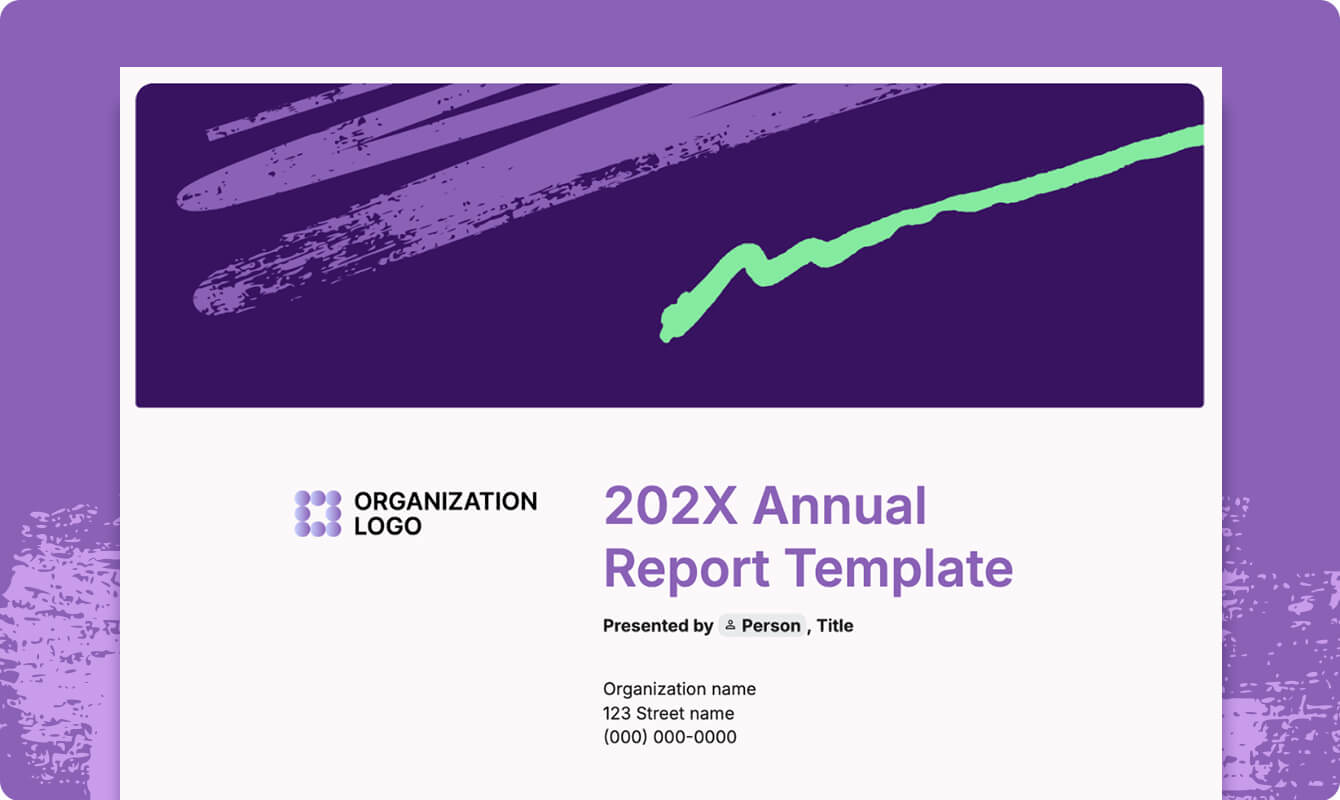
Depending on your organization’s goals and audience, your report may include the following elements:
Leadership messages
Highlight your nonprofit’s leadership, from the executive director (ED) to the board chair, with an address from them directly to your donors. This type of messaging adds credibility and shows the value of your message.
Stories and testimonials
Do you have a volunteer who can share a story about the work they’ve done with your nonprofit? Is there a long-time or beloved staffer who can speak to the fulfilling work they do? Do you have any great photos of your programs in action?
Feature these stories and pair them with relevant images to convey your organization’s unique story to your audience, shining a spotlight on your nonprofit’s impact.
Financial transparency
At its most basic, an annual report should include the past year’s financial highlights, perhaps in table or graph form, with a few key takeaways pulled out.
Answer basic questions donors will have about your nonprofit financials: how much revenue you earned, where it came from, and how it was spent. Donors and funders will want to see clearly how their contributions impacted your organization’s work.
You might also consider including a donor roster, which can be helpful for donor cultivation, retention, and stewardship. Often at the end of the report, this list of donors provides a visible “thank you.” It can also be a compelling nudge to support the organization.
Report timing
Because you want the information to interest your donors, keep it current by publishing it within the first quarter of your new fiscal year. With reliable donor database software and management, you can easily pull together many parts of an annual report. These include financial information, donor information, and volunteer and programmatic statistics.
Securing letters and statements from contributors such as board members or volunteers may require more hands-on management, so it’s best to begin this process even before you plan your report’s design.
7 top examples of nonprofit annual reports
Now that you know what goes into an effective annual report, let’s look at how some of these essentials are used in practice. While each is different, what these annual report examples have in common is how well they appeal to readers. In some cases, this is achieved through compelling design, and in others, it’s due to exceptional data-driven storytelling.
Here are seven of the best nonprofit annual report examples that your organization can look to for inspiration.
1. Mt. Carmel’s Veterans Service Center
Mt. Carmel’s Veterans Service Center is committed to helping veterans transition to post-military life. In order to demonstrate its impact to supporters and the public, MCVSC created a detailed annual report filled with stunning visuals — including those of staff, volunteers, and clients — alongside quotes and quick data points that are easy to understand at a glance.
2. Pathfinder International
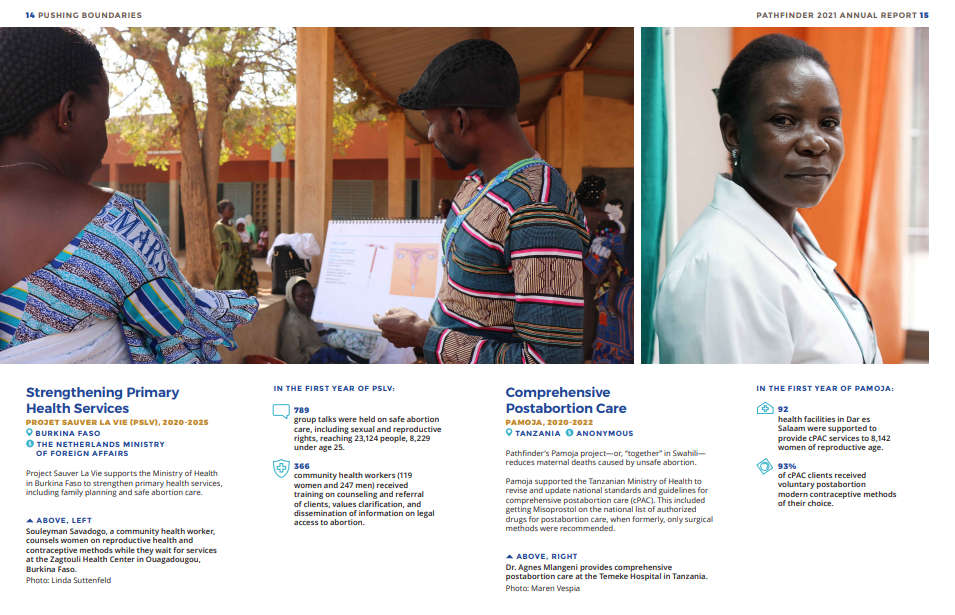
Pathfinder International’s annual report combines thoughtful design, powerful graphics, individual stories, and gorgeous portraits to vividly showcase its beneficiaries. While the organization uses visually appealing graphics to highlight key data points, it never overshadows the focal point of the report: the people it serves.
One section that stands out is titled “Pathfinder’s Global Impact,” which communicates how the organization has strengthened primary health services in the wake of COVID-19. Additionally, it details how its post-abortion care program in Tanzania has improved health facilities across the region. Each page combines clean data visualization and concise, bulleted information on how Pathfinder made an impact, while still giving the spotlight to the individuals the nonprofit served.
Why it works:
- Appealing graphics put the focus on the impact
- Clean, easy-to-understand data
- Clear examples of Pathfinder’s impact and the individuals it serves
3. The WNET Group
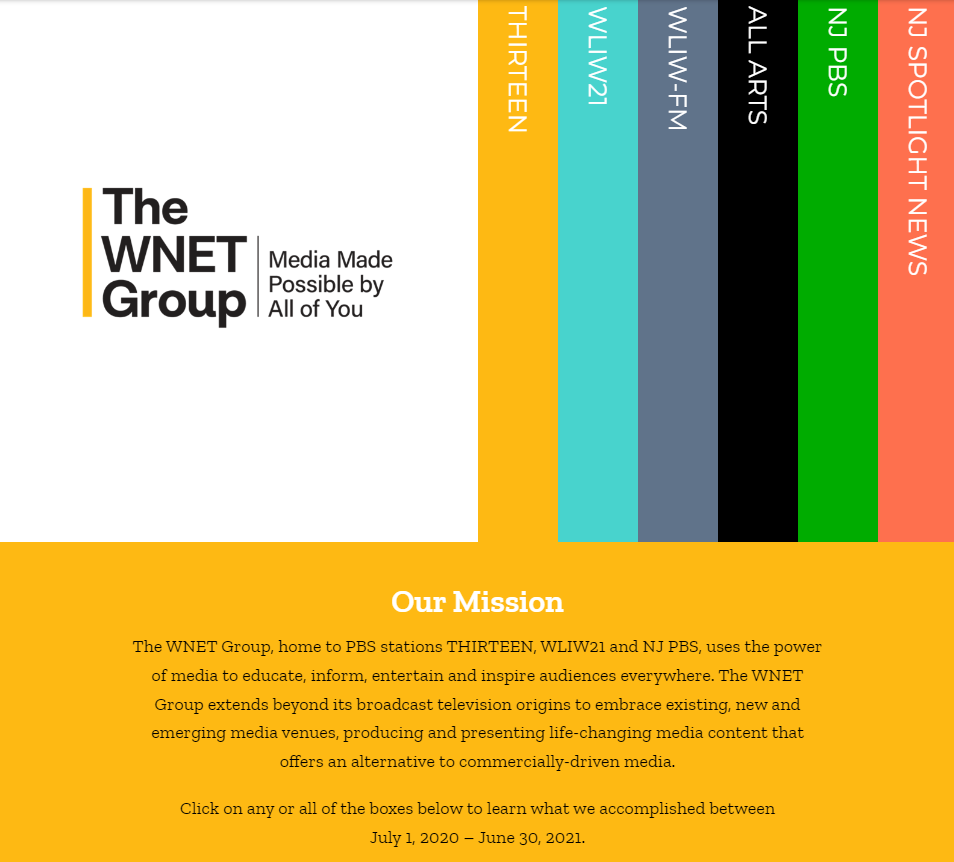
While many nonprofits present their annual reports in a static PDF or print format, adding interactive elements can take yours to the next level.
For instance, the WNET Group’s “Year In Review” series allows for audience interaction in its web design to create a dynamic report. The user can expand the information they’re interested in learning more about, allowing them to access the details they care about so they’re more likely to absorb the information.
Why it works:
- Compelling storytelling
- Interactive elements engage the reader
4. The Humane Society
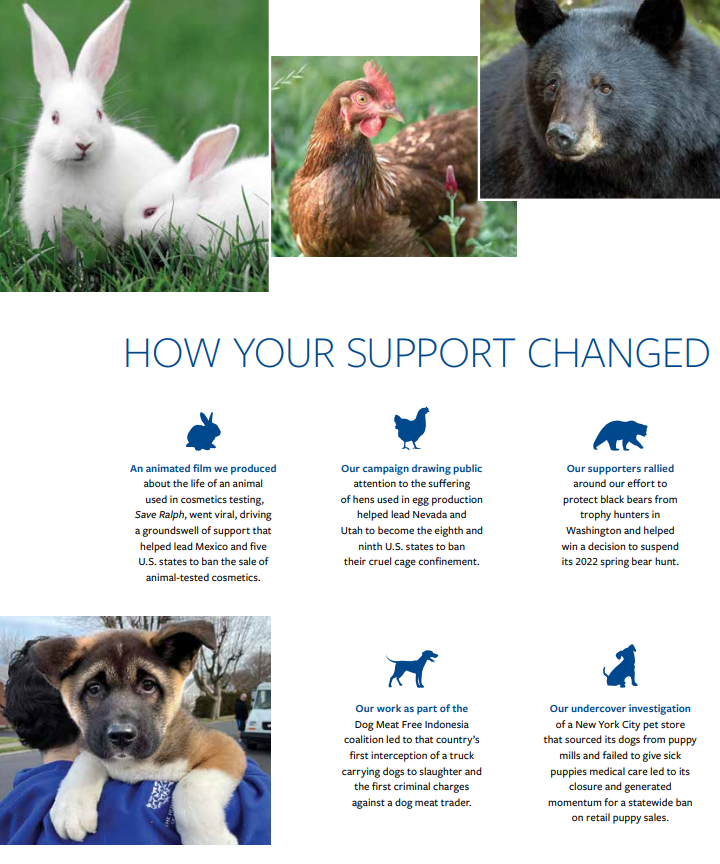
Keeping with the organization’s purpose to save animals in need, the Humane Society’s 2021 annual report includes ethical and effective appeals to emotion on every page. Photos of a wide range of animals demonstrate how its programs benefit hundreds of species across the country. Readers will likely see their favorite animals featured, helping them connect more deeply with the Humane Society.
Besides the impactful graphics, the organization provides clear and concise information about the progress it has made in the US and internationally, alongside compelling copy and analytics. Throughout the report, the focus remains on beneficiaries while still highlighting the organization’s important updates.
Why it works:
- Clear detail and data in a compelling format
- Appeals to emotion
5. The American Kidney Fund
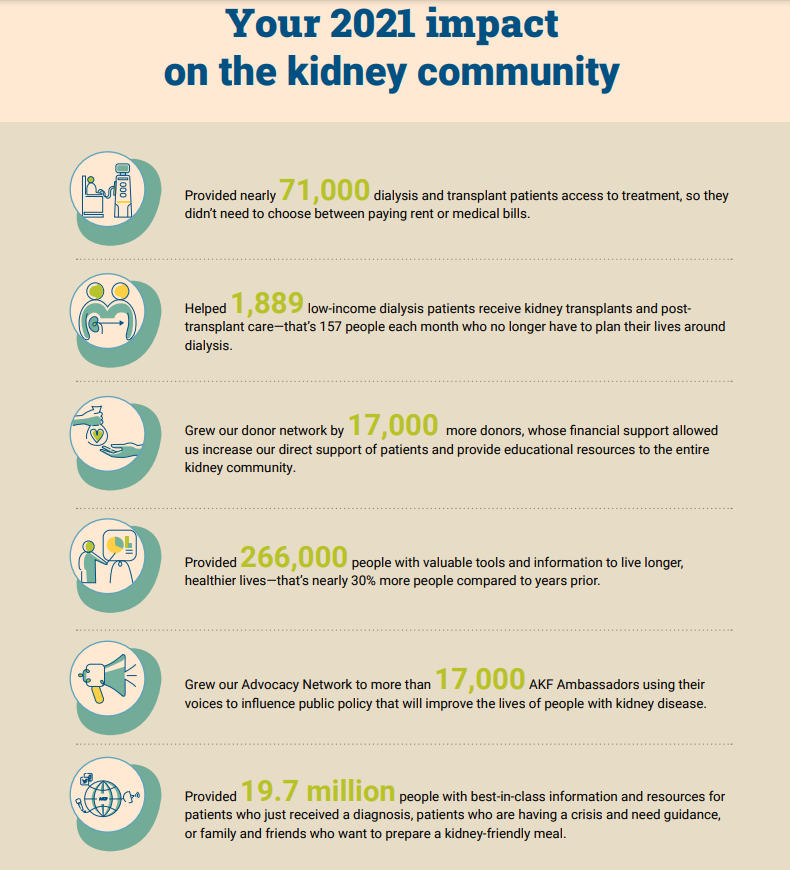
The American Kidney Fund’s 2020 report features eye-catching graphic design, but what it does best is center the donor’s impact. The impact summary page speaks directly to supporters and gives them credit for furthering the organization’s purpose.
It also summarizes the year’s metrics and milestones by combining colorful illustrations and bolded statistics. The American Kidney Fund’s annual report offers donors valuable reasons to give again in the future while presenting impressive impact statistics.
Why it works:
- Depicts metrics and milestones via images and illustrations
- Focuses on donor and supporter impacts
6. Broadway Cares
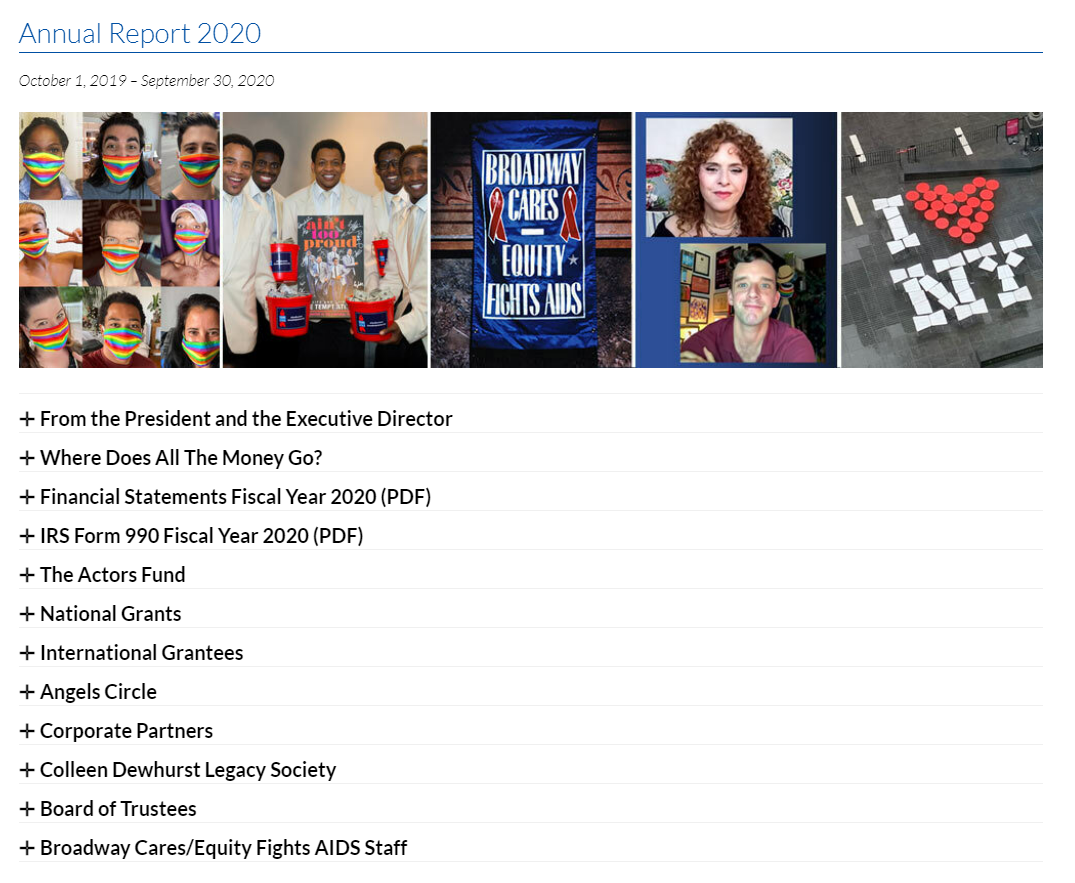
Broadway Cares’ 2020 report demonstrates the importance of consistency while creating annual reports. To boost user-friendliness, readers should be able to easily access the information they’re looking for. Broadway Cares does this very well. By hosting the information directly on its website with a convenient menu (and without downloads), the organization helps supporters track their impact over the years.
Why it works:
- Easy to access
- Makes it simple for supporters to see their impact
7. Brookings Institution
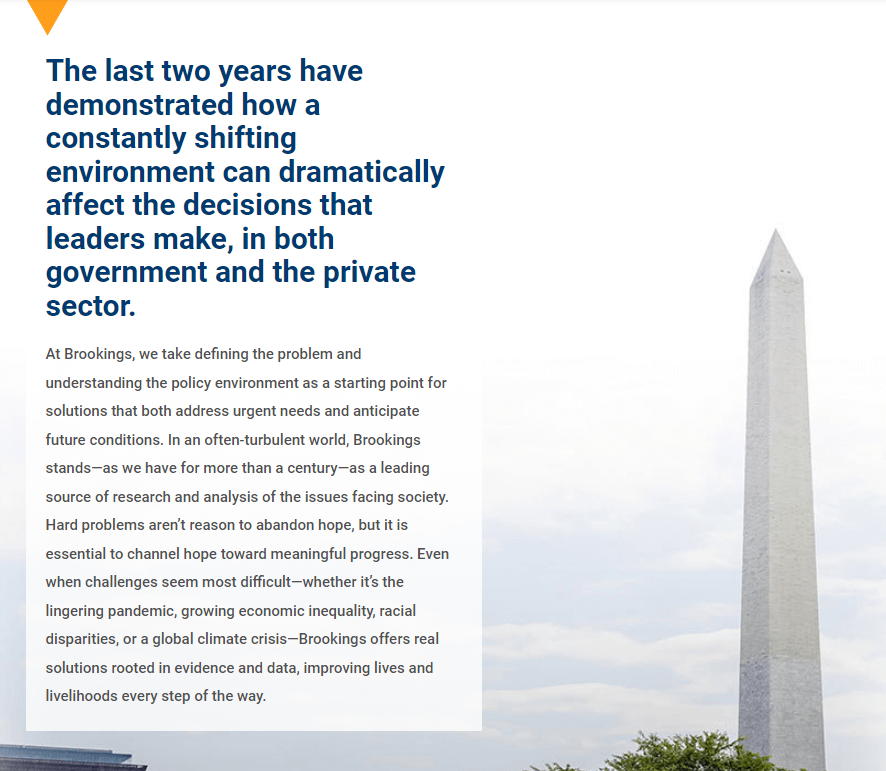
The Brookings Institution annual report is comprehensive. It weaves a consistent narrative throughout the report, combining nonprofit storytelling with data-informed impact. Brookings also contextualizes the report in terms of those years’ notable current events. This highlights how they remained committed to producing real-time, thoughtful analysis and practical policy recommendations during a challenging time.
Why it works:
- Highlights the external context of the organization’s impact
- Compelling narrative and story
Tips for maximizing your annual report impact
An annual report isn’t simply a document; it’s a storytelling opportunity that can have a major impact on your audience and inspire future support. These tips can help you craft a report that captures attention and motivates your supporters.
Tell a compelling story
Go beyond simply sharing numbers and data. Instead, tell the human story behind your nonprofit’s mission and work. Real-life examples of people or communities you’ve served can be evidence of the meaningful work your organization does. Highlighting key milestones or achievements lets you celebrate successes, and compelling quotes or visuals from stakeholders bring your story to life.
Use data to highlight your impact
Of course, even the most compelling story won’t mean much without data to back it up. Your annual report should include metrics and visuals, like charts or infographics, to show your organization’s progress and demonstrate accountability. Make sure you’re collecting data to measure impact on a regular basis so it’s ready come report time.
Think about your tone and audience
Make sure your report meets your audience where they are. That means understanding who your audience is and how they’re most receptive, whether it’s via emotional or data-driven storytelling. The more you tailor your narrative to your audience, the more you’ll connect with them.
Avoid last-minute rushes by planning ahead
It takes time to create a strong annual report. Start by outlining your goals, gathering data and stories, and establishing a production timeline. This doesn’t just reduce stress; it also allows more time for collaboration across teams to ensure a cohesive finished product.
Why annual reports matter
A well-crafted annual report can deepen trust, strengthen relationships, and attract new supporters, partners, and funders to your organization — all helping your nonprofit build resilience amid funding disruption.
In addition to current donors and prospective supporters, the annual report will be of interest to grantmaking foundations and corporate sponsors who have funded your nonprofit in the past. They’ll be curious to see how their funding made a difference to your organization, and your annual report will fill in some blanks for them.
An annual report may also interest future partners, who can use it to determine whether your programs align with their funding opportunities. Finally, if your organization receives government support, your report will interest local committees and elected officials who make budget decisions.
Highlight impact with Bonterra
With effective planning and compelling storytelling, your annual report will be an authentic representation of your nonprofit’s important work. It shows readers the value your organization places on transparency, accountability, and impact.
While there are some elements that remain consistent across annual reports, your report should be unique to your nonprofit impact story. Start with an annual report template and, as you write, ensure your supporters can identify your organization’s purpose and values, as well as how you’re making an impact.
If you want to make it easier to capture and analyze data for your annual report, Bonterra is a great option. Bonterra makes it possible to collect data throughout the year and, at report time, segment donors and supporters so you know exactly who should receive your report. If you’re ready to make your annual reports even stronger, request a demo today.

FAQ
What is a nonprofit annual report?
A nonprofit annual report is a physical or virtual document that nonprofit organizations create to provide donors with an account of their activities and spending for the year. These reports are not official tax documents — they’re donor-centered information packets designed to showcase accomplishments and thank readers for their continued support.
Do nonprofits need annual reports?
Yes, nonprofits need annual reports. While it isn’t legally required and you don’t necessarily need a beautiful, full-color 40-page production, an accounting of your organization’s work over the past year goes a long way toward maintaining positive relationships with donors. Even if you only create a two-page flyer, you should get in the habit of producing an annual report to maintain transparency with existing and potential donors.
How do you start working on your first annual report?
To start working on your first annual report, outline your organization’s key achievements over the past year, including quantifiable metrics and financial highlights. Define your audience and goals: inspiring donors, engaging the community, or cultivating trust with stakeholders (or a mix!).
Let this guide your format, tone, design, and distribution. Gather stories, photos, and anecdotes from staff and volunteers to paint a picture of your mission in action.
What should be included in a nonprofit annual report?
Annual reports are highly customizable to support various nonprofits’ needs, but as a baseline, most nonprofits prioritize including:
- Financial reports
- Major achievements
- Lists recognizing donors, board members, volunteers, and staff
- Information about your organization’s purpose
Organize your annual report in any way that makes sense for your organization and include additional information that benefits your supporters. Just remember to thank supporters at the end of the document for making your year successful.
What’s the most important part of an annual report for nonprofits?
The most important part of a nonprofit annual report is the description of your accomplishments. Your supporters want to know what you did, but more importantly, they want to know why you did it. For each initiative, fundraising campaign, or project highlighted in your annual report, address these questions:
- How did the project further your purpose?
- What were the results?
- Did you meet or exceed your goals?
- Who contributed to making your efforts a success?
- Why did you spend your time and funding the way you did?
- What tangible impact did your project or campaign make?
Not all readers will automatically understand how your activities help you achieve your purpose, so include specific data to clearly demonstrate your impact.
How should nonprofits discuss financial information in an annual report?
Include a dedicated financial section in your nonprofit annual report that clearly explains where your organization’s revenue came from and how you spent your funds. To make your financial information more accessible for readers, try:
- Including visuals: Pie charts, bar graphs, and other visuals can help readers quickly see the big picture and understand trends in your data. Plus, visuals make your annual report more dynamic and engaging for readers.
- Using straightforward language: Short narrative descriptions are essential for helping donors understand how you used their donations and why. Explain the meaning behind every number in plain, direct language that your supporters can read easily. Avoid complex accounting terms and industry jargon.
Remember, your annual reports are written for your donors, aiming to build trust and promote transparency. Tailor your writing, formatting, and visuals so they can quickly comprehend the information.
How should nonprofit annual reports present donor lists?
There are several ways to present a donor list, and ultimately, you should organize your annual report’s list of donors in a way that makes the most sense for your nonprofit organization. Most nonprofits organize donors by contribution level and then alphabetize each of those lists. You can also alphabetize the full list without regard to donation level. Make sure to check with your donors ahead of time to verify that they want their names to be listed in your annual report, as some may wish to remain anonymous.



Work with Bonterra
Ready to drive more impact?